Almost every wedding album order that goes wrong goes wrong on the first phone call. The couple asks how big the album can be. The photographer answers. Ten minutes later there is a size, a page count and a budget locked in — and not one word has been said about the photographs that are supposed to go inside it.
We build several thousand wedding albums a year, and the ones that come back to us for reprints are almost never failures of material. They are failures of sequence. The studio made the four big decisions — size, spread count, cover and presentation box — in the order the client asked about them, rather than the order the work demands.
Get the order right and the album more or less designs itself. Here is how we think about it.
Start With the Story, Not the Size
The first decision is not a decision about the album at all. It is a decision about the edit. Before you quote a size, before you promise a page count, sit down with the take and cut it to the photographs that actually carry the day. Not the best photographs — the necessary ones. The ones without which the story has a hole in it.
For a two-day Indian wedding, that is usually somewhere between 120 and 180 images. For a single-day church-and-reception wedding, it is often 60 to 90. Those are not rules, they are the numbers we see most often on the files that arrive at our bindery. What matters is that you arrive at a number before you talk about format, because that number is the constraint everything else has to satisfy.
Work backwards from the edit and the rest falls out naturally: the count tells you how many spreads you need, the spreads tell you how thick the book will be, the thickness tells you what binding and cover can carry it. Work forwards from the size and you will spend the design phase either padding a thin story or amputating a full one. Both are visible in the finished book.
A wedding album is not a container for everything you shot. It is an argument about what mattered. The edit is where you make that argument — everything after it is just carpentry.
The ZG Bindery Desk
Size and Orientation
Once you know the edit, the format becomes an easy question, because the images tell you the answer. Lay out your twenty strongest frames and look at their shape. If most of your hero images are wide — the mandap from the back of the hall, the couple against a landscape, the full family group — you want a landscape album. If your strongest work is portraiture, close and vertical, a portrait album will let those frames run full-page without cropping the top of someone's head off.
Square is the diplomat's format. It handles portrait and landscape images with equal grace and never fights the layout, which is why it has become the default for studios that shoot a mixed take. The trade-off is that square rarely gives any single image the drama a full-bleed landscape spread can. It is the safe answer, and safe is often correct — just choose it on purpose rather than by inertia.
The sizes we see most
- 12×12 inch square — the workhorse. Big enough to feel substantial, small enough to sit on a coffee table and be picked up one-handed.
- 12×18 or 12×16 inch landscape — for photographers whose signature work is wide. The panoramic spread across the gutter is the whole point of this format; if you are not going to use it, do not pay for it.
- 10×12 or 12×15 inch portrait — flattering to full-length portraits and couple shots, and the format that photographs best in the client's own hands.
- 8×8 or 8×10 inch — the parent copy or duplicate size. Never the primary album, and never sold as one.
One rule we hold to firmly: do not mix orientations across a single album to "solve" a mixed take. An album that fights its own format reads as indecision, and no amount of paper quality hides it.
Spread Count: The Number Everyone Gets Wrong
This is where most albums are ruined, and it is almost always ruined in the same direction: too many images, too few spreads. The couple has paid for a large album and the studio, wanting to look generous, packs eight or nine photographs onto every spread. The result is a book that looks like a contact sheet with a leather cover.
Our working number is two to four images per spread, averaged across the book. Some spreads carry a single full-bleed frame. Some carry six small ones in a tight grid because the moment was fast and the grid is the honest way to show it. But if your average is above four, the album is over-stuffed and every photograph in it is being asked to do less work than it could.
That gives you a simple calculation. A 150-image edit at an average of three per spread is 50 spreads. Add three or four for the opening, the closing and one deliberate pause, and you are looking at a 55-spread album. That number should be arrived at, not chosen from a price list.
Pacing is a craft decision
A good album breathes. It opens quietly — a detail, an empty room, the dress on a hanger. It builds. It gives the biggest moment of the day a spread of its own, with nothing else on it, because that is what "biggest" means. It slows down for the portrait session and speeds up for the dance floor. It closes on something small.
White space is not wasted space. A photograph with room around it is a photograph you are being told to look at. When you crowd a spread, you are telling the couple that nothing on it is worth stopping for.
Quote the spreads, not the pages
Half the disputes we see between studios and couples come from the word "pages". A spread is two facing pages seen as one image. Quote in spreads, say the word "spreads" out loud, and put the number in writing — you will never argue about it again.
The Cover Is the Client's First Touch
The couple will look at the photographs for an hour on the day the album arrives. They will touch the cover every time they pick it up for the next forty years. That ratio should tell you how much thought the cover deserves.
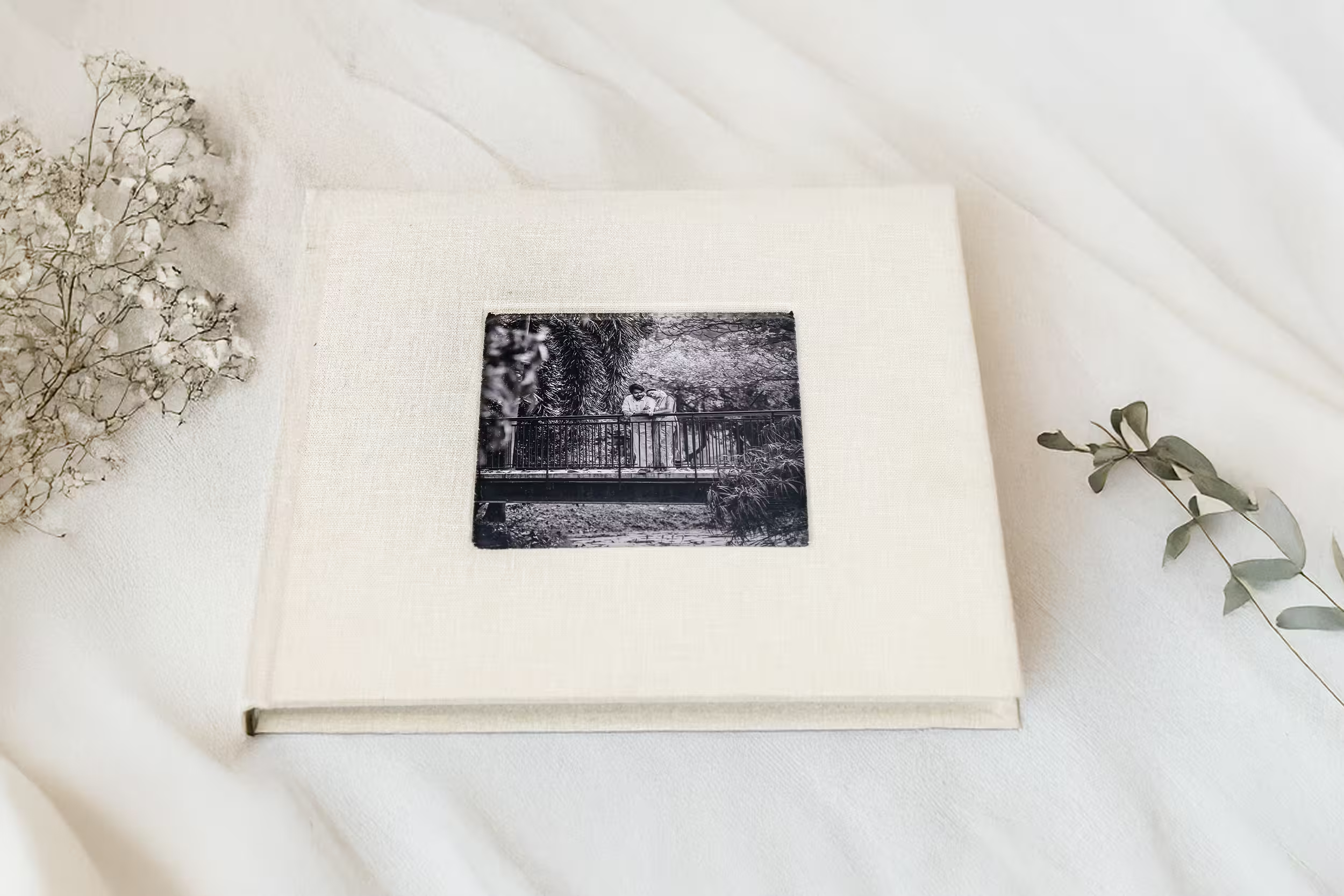
The choice is really a choice about how you want the album to age. Full-grain leather darkens, softens and picks up a patina — it looks better at ten years old than it did on delivery, which is exactly what you want from an heirloom. Suede is quieter and warmer in the hand, and photographs beautifully, but it marks. Rexine is durable, consistent and immune to humidity, which makes it the sane choice for hot, damp climates and for albums that will be handled by a lot of people. Fabric and jute give a softer, more contemporary look that reads as considered rather than expensive.
Match the material to the wedding, not to the price tier. A rustic outdoor wedding in a glossy black leather cover is a mismatch the couple will feel without being able to name it. We have written the long version of this — how each family wears, how each one photographs, and who each one is really for — in our cover material guide. Read it before your next consultation, not during.
Presentation: The Box Is Part of the Album
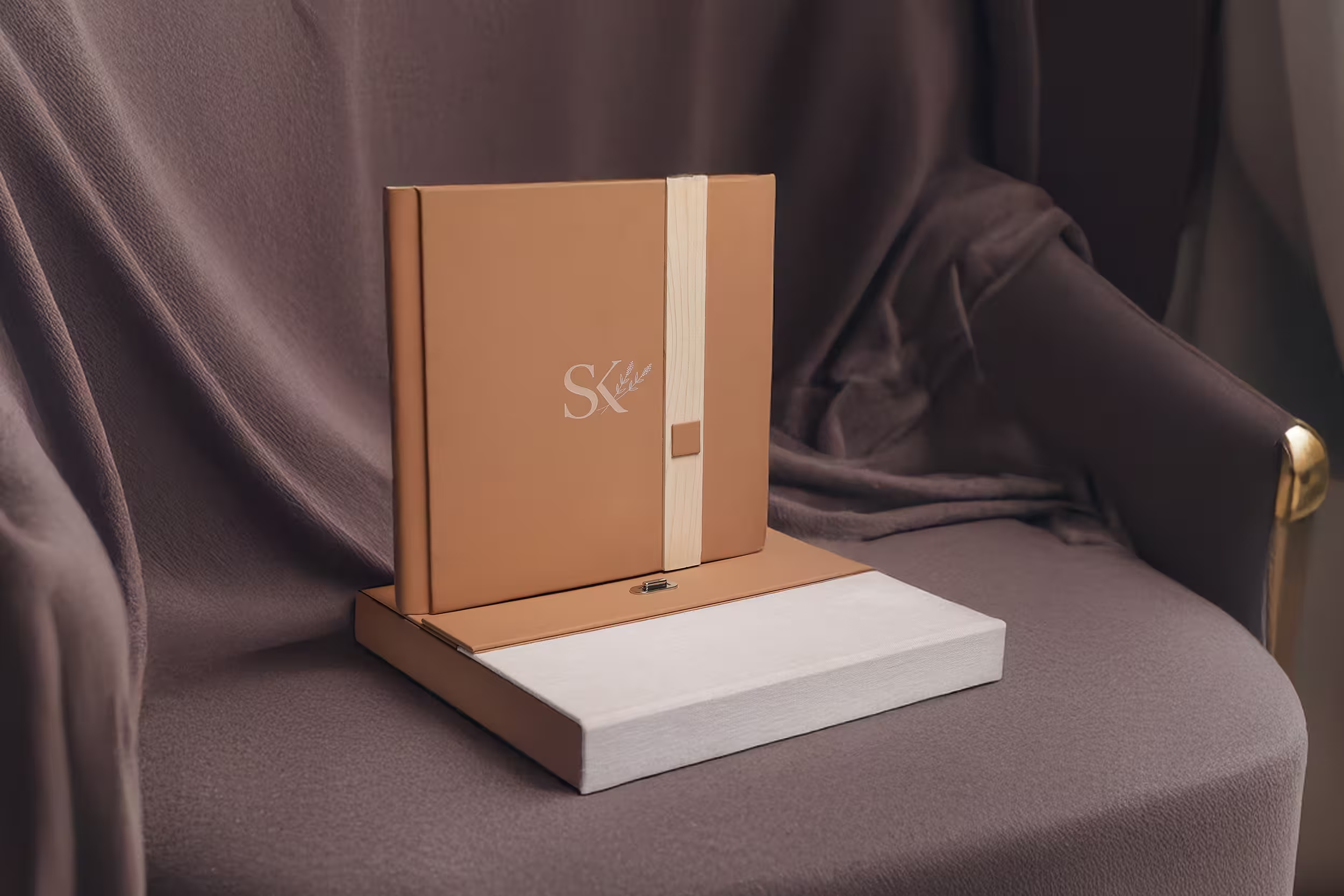
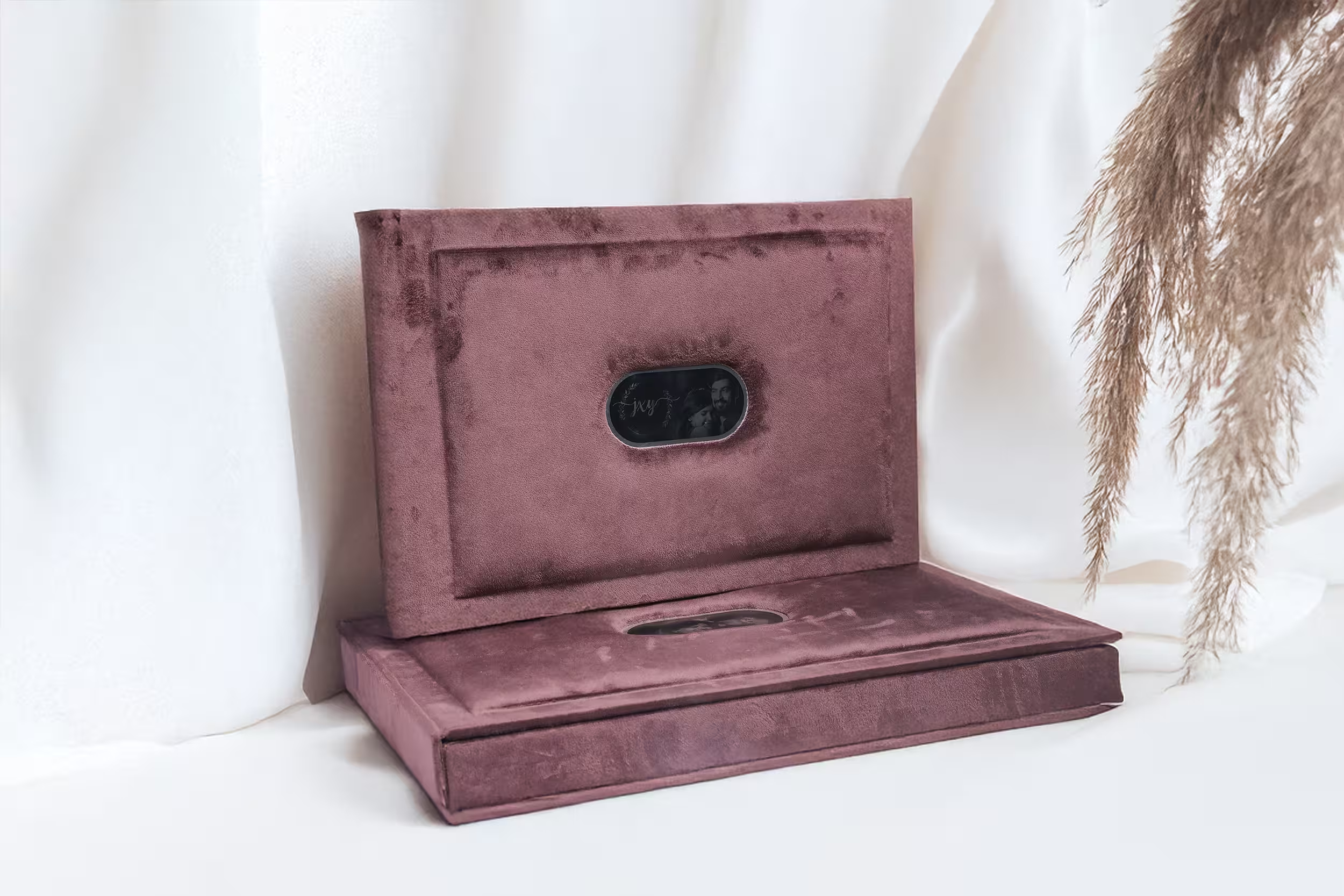
The box is the decision studios skip, and it is the one that changes the moment of handover more than any other. An album handed over in a courier bag is a product. The same album lifted out of a rigid, cloth-lined box is an object with weight and occasion attached to it. Same book. Entirely different memory of receiving it.
Practically, the box is also the album's life-support system. It keeps light off the cover, keeps dust out of the gutter, and gives the couple somewhere obvious to store the book flat instead of standing it up on a shelf, where the spine slowly sags under its own weight. A good box adds years to a book. We say more about that in our album care guide.
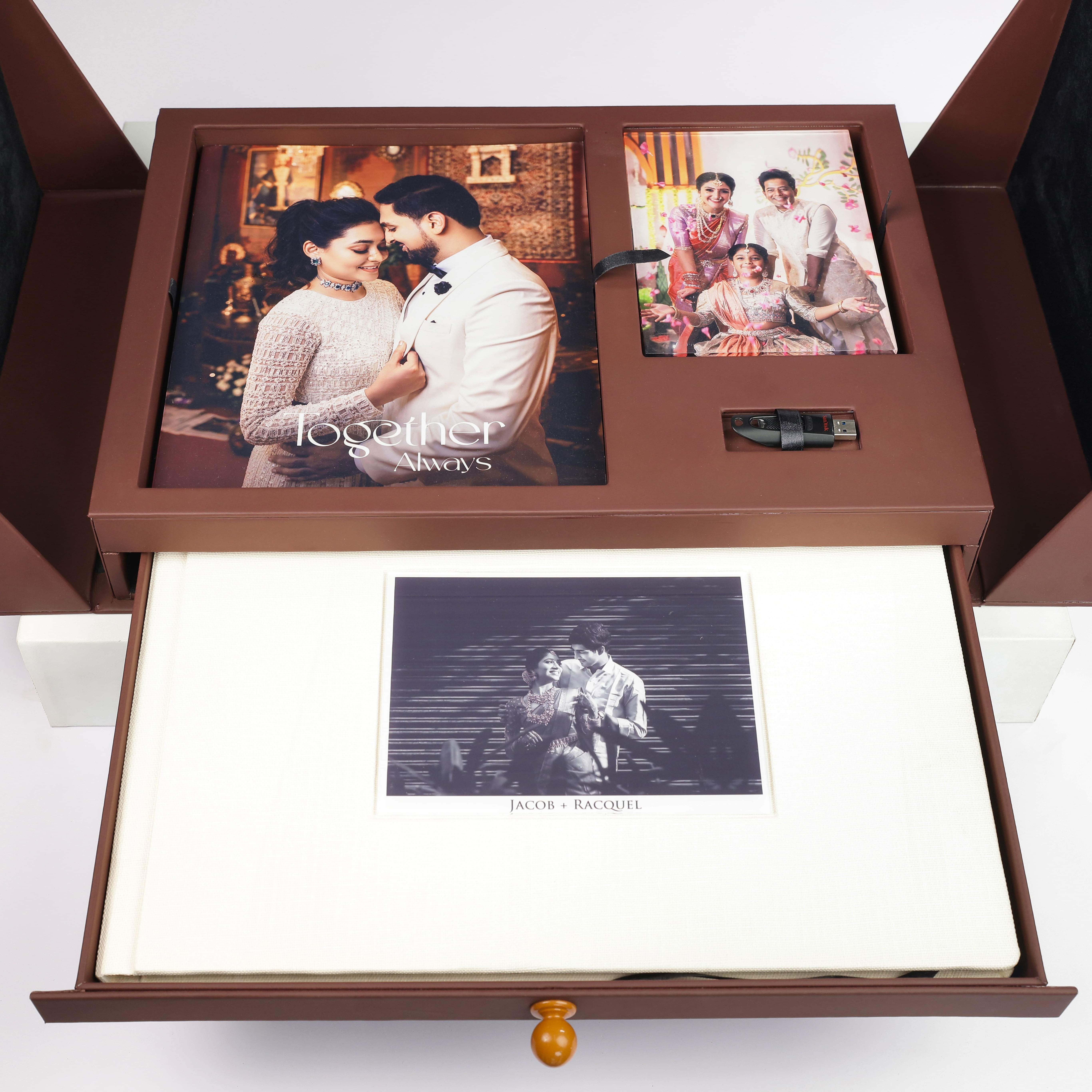
Then there are the parent copies. Two sets of parents, both of whom were at the wedding, both of whom would like a book. Sell them at the same time as the main album — the design is already done, the files are already prepared, and the marginal cost of running two smaller duplicates alongside the primary is a fraction of what it costs to reorder them separately nine months later. Offer them as 8×8 or 8×10 duplicates in a simpler cover, boxed the same way. Most couples say yes if you ask once, and never think of it if you do not.
And then plan the handover itself. Not a doorstep drop. A short appointment at the studio, the box on a clean table, the couple opening it themselves while you say nothing. That five minutes is the last impression of your service anyone will carry, and it is the cheapest marketing you will ever do.
A Practical Ordering Checklist
Run this in order, top to bottom, before you place a single album order with us or anyone else.
- Cut the edit first. Arrive at a final image count before you talk about format, size or price with the couple.
- Look at the shape of your twenty best frames. Wide, tall or mixed — that decides landscape, portrait or square. Do not decide it from a catalogue.
- Divide the edit by three. That is your rough spread count. Add three or four spreads for the opening, the close and one deliberate pause.
- Choose the cover for how it should age, not for what it costs. Match the material to the wedding's character.
- Specify lay-flat binding if any image crosses the gutter. If your layout has a single panoramic spread in it, this is not optional.
- Add the box at the same time as the album. It is not an upsell, it is part of the object.
- Ask about parent copies once, early. Same design, smaller size, same box. Do it in the same production run.
- Soft-proof and sign off the layout — spread by spread, with the couple, in writing, before anything goes to print.
- Book the handover as an appointment. Ten minutes, in person, with the box closed when they walk in.
None of this is expensive. None of it requires a better camera or a bigger budget. It requires making four decisions in the right order — story, format, spreads, cover, and then the box that carries them all — and refusing to make any of them out of sequence because a client asked a question early.
Do that, and the album stops being something you sold. It becomes something they keep.